Over A; across A; along A
- Over A; across A; along A
- A is the direct object of a transitive verb
- Marks place of departure A
- Shows state A
- Shows the cause A of the subject's emotions B is a verb that shows emotion such as 悲しむ/かなしむ、喜ぶ/よろこぶ, etc.
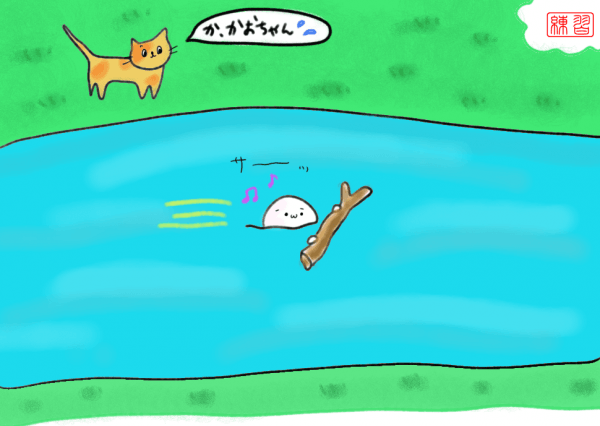
今日は泳いで川を渡った。
Today I swam across the river.
35
ゴキブリが私のお腹の上を横切った。
A cockroach ran across my stomach.
0
32
小川を歩いて渡った。
I crossed the small stream by foot.
0
93
階段を下りた。
I went down the stairs.
0
30
日本海を船で渡った。
I crossed the Japan Sea by boat.
0
13
右の道を行って下さい。
Take the road on the right.
0
17
誰かが階段を登って来る。
There's somebody coming up the stairs.
0
17
僕は駅の階段を降りた。
I went down the station stairs.
0
32
階段を上がる。
Go up the stairs.
6
12
彼は階段を上がった。
He ascended the stairs.
0
-1
何の道を行っても駅に出ます。
Whichever road you may take, it will lead to the station.
0
12
彼は階段をゆっくりと上がった。
He went up the steps slowly.
0
10
私は毎日森の中を歩く。
I walk in the forest every day.
0
Getting the sentences
Construction
(Elements in parentheses are optional.)
Basic Examples:
橋を渡る (cross over a bridge)
Notes
Shows the action passing A
Where this grammar is found
Grammar usage notes
Nothing posted yet!
Questions/Discussion
Nothing posted yet!
A is the direct object of a transitive verb
- Over A; across A; along A
- A is the direct object of a transitive verb
- Marks place of departure A
- Shows state A
- Shows the cause A of the subject's emotions B is a verb that shows emotion such as 悲しむ/かなしむ、喜ぶ/よろこぶ, etc.
35
ミルクを飲みなさい!
Drink the milk!
0
31
蚯蚓を食べた。
I ate an earthworm.
0
19
母の誕生日だったので、ケーキを焼きました。
I baked a cake because it was my mother's birthday.
0
14
よかったら、此のCDを聞いて下さいね。
If you'd like, please listen to this CD.
0
26
納豆を食べてみた。
I tried to eat natto.
0
20
病気の時は、此の薬を飲んで下さい。
Please take this medicine when you are sick.
0
7
ジョンは本棚を作った。
John built a bookcase.
0
11
君と同じシャツを買った。
I bought the same shirt as you.
0
3
私はライオンを見て驚いた。
I was surprised to see a lion.
0
3
彼女はドアを引いて開けた。
She pulled the door open.
0
5
母は弟に黄色い傘を買った。
Mother bought my brother a yellow umbrella.
0
74
此の言葉の意味を教えて下さい。
Please tell me the meaning of this word.
0
38
日本の漫画を集めて居ます。
I am collecting Japanese comic books.
0
5
赤ん坊は口を開けた。
The baby opened his mouth.
0
2
私も此の方を知りませんでした。
I myself did not know him.
0
17
素敵なカップを見つけた。
I found a nice cup.
0
1
母はぱちっとハンドバッグを閉めた。
Mother closed her purse with a snap.
0
21
朝は何を食べますか?
What do you eat for breakfast?
0
14
学校に行く時は帽子を被ります。
I put on a cap when I go to school.
0
6
私は京都大学を卒業為ました。
I graduated from Kyoto University.
0
10
彼は彼女に素敵な贈り物を為た。
He gave her a nice present.
0
9
別の物を見せて下さい。
Please show me another.
0
5
彼は夜私を訪ねた。
He called on me at night.
0
1
話を良く聞いて下さい。
Please listen carefully to the talk.
0
15
メグは絵に色を塗った。
Meg colored the picture.
0
3
彼らは、レコードを買います。
They will buy a record.
0
38
良く漢字を間違えます。
I often make mistakes with kanji.
0
33
毎朝新聞を読みます。
I read the newspaper every morning.
2
4
私は毎日12時に昼ご飯を食べます。
I eat lunch every day at 12.
0
31
日曜日は仕事を為ません。
I don’t work on Sundays.
0
49
「塩を取って下さい」「はい、どうぞ」
"Please get the salt." "Here you are."
0
30
10円切手を5枚買った。
I bought five ten-yen stamps.
0
47
七月1日から仕事を始めます。
I will start working on July 1.
3
7
彼を見せて下さい。
Please show me that one.
0
12
ケーキをもっと召し上がって下さい。
Please help yourself to more cake.
0
12
コートを持ちましょうか。
Shall I carry your coat?
0
21
此の箱を開けて下さい。
Please open this box.
0
12
其の戸を閉めて下さい。
Please close the door.
0
13
其の男の子は茶色の靴を履いて居ました。
That boy was wearing brown shoes.
0
Getting the sentences
Construction
(Elements in parentheses are optional.)
Basic Examples:
御金を払う (pay money)
Where this grammar is found
Grammar usage notes
it is also common to see を at the end of a sentence in this usage, to grab attention, or as set phrase (usually to express wishes)
refer to the "を at the End of a Sentence" section, at
[www.tofugu.com]
refer to the "を at the End of a Sentence" section, at
[www.tofugu.com]

Questions/Discussion
Nothing posted yet!
Marks place of departure A
- Over A; across A; along A
- A is the direct object of a transitive verb
- Marks place of departure A
- Shows state A
- Shows the cause A of the subject's emotions B is a verb that shows emotion such as 悲しむ/かなしむ、喜ぶ/よろこぶ, etc.
6
彼らは今日東京を発つ。
They will depart (from) Tokyo today.
0
Getting the sentences
Construction
(Elements in parentheses are optional.)
Where this grammar is found
Grammar usage notes
Nothing posted yet!
Questions/Discussion
Nothing posted yet!
Shows state A
- Over A; across A; along A
- A is the direct object of a transitive verb
- Marks place of departure A
- Shows state A
- Shows the cause A of the subject's emotions B is a verb that shows emotion such as 悲しむ/かなしむ、喜ぶ/よろこぶ, etc.
2
彼女は東京でシステムエンジニアを為て居る。
She is a systems engineer in Tokyo.
0
13
現在の住まいは長方形の形を為て居る。
My current residence is shaped like a rectangle.
0
14
彼の雲は魚の形を為て居る。
That cloud is in the shape of a fish.
0
7
グリーンさんは歴史の先生を為て居ます。
Mr Green is a teacher of history.
0
1
トニー君は良い声を為て居ます。
Tony has a nice voice.
0
10
ボブは其のデパートでエレベーター係を為て居る。
Bob operates an elevator in the department store.
0
Getting the sentences
Construction
(Elements in parentheses are optional.)
Basic Examples:
丸の形を為て居る (shaped like a circle)
撮影監督を為て居る ((someone is) working as a director of photography)
結婚して居る ((someone is) married)
Where this grammar is found
Grammar usage notes
Nothing posted yet!
Questions/Discussion
Nothing posted yet!
Shows the cause A of the subject's emotions
B is a verb that shows emotion such as 悲しむ/かなしむ、喜ぶ/よろこぶ, etc.
- Over A; across A; along A
- A is the direct object of a transitive verb
- Marks place of departure A
- Shows state A
- Shows the cause A of the subject's emotions B is a verb that shows emotion such as 悲しむ/かなしむ、喜ぶ/よろこぶ, etc.
6
私達は彼の死を悲しんだ。
We mourned his death.
0
8
両親は娘の誕生を喜んだ。
The parents were delighted over the birth of their daughter.
0
Getting the sentences
Construction
(Elements in parentheses are optional.)
Basic Examples:
被害を悲しむ (be saddened by the damage)
Where this grammar is found
Grammar usage notes
Nothing posted yet!
Questions/Discussion
Is it also ok to use で for reason? e.g. 彼の死を悲しんだ vs 彼の死で悲しんだ
If ok, when to use which? Is there a difference in nuance?
If ok, when to use which? Is there a difference in nuance?

I may be wrong but my take is the following: 悲しむ is transitive and をis attached to the object of the mourning, the death. If you want to show the cause with で then the adverb form should be used: 彼の死で悲しくなった。


